Buying a fish feed plant is not like buying a single machine. It is a long-term investment that shapes how smoothly your daily production runs, how consistent your pellets turn out, and how easily you can grow later. That is why choosing the right Fish Feed Plant Manufacturer matters just as much as choosing the machine itself.
If you are comparing options right now, this guide walks you through what to look at, what to ask, and what to avoid. No sales talk, just practical points that help you decide with confidence.
Start With Your Own Requirements
Most buyers begin with the question, "What is the price?" A better first question is, "What exactly do I want to produce?" Imagine two buyers. One runs a fish farm and wants to make feed for his own ponds. The other wants to sell bagged feed to farmers in the region. Both need a plant, but their capacity, feed type and budget will look very different.
Before you talk to any manufacturer, write down these basics:
- Feed type: floating, sinking or slow-sinking
- Fish species and the pellet sizes they need
- Daily production target in kg per hour
- Raw materials you plan to use, such as fish meal, soybean meal, rice bran or maize
- Space and power supply available at your site
- Your budget now, and your expansion plans for later
With this list ready, a good manufacturer can suggest a suitable configuration instead of pushing a standard package.
Know the Stages of Fish Feed Production
A fish feed manufacturing plant is a chain of machines working together, and a weak link anywhere slows the whole line. The usual flow includes raw material cleaning, grinding, mixing, conditioning, extrusion, drying, cooling and packing.
Understanding this flow helps you ask better questions. For example, if the grinder cannot give a fine, even powder, even a good extruder will struggle to deliver smooth pellets. If you are still working on the layout, this overview of fish feed plant setup shows how the different sections fit together.
Why the Fish Feed Extruder Machine Matters Most
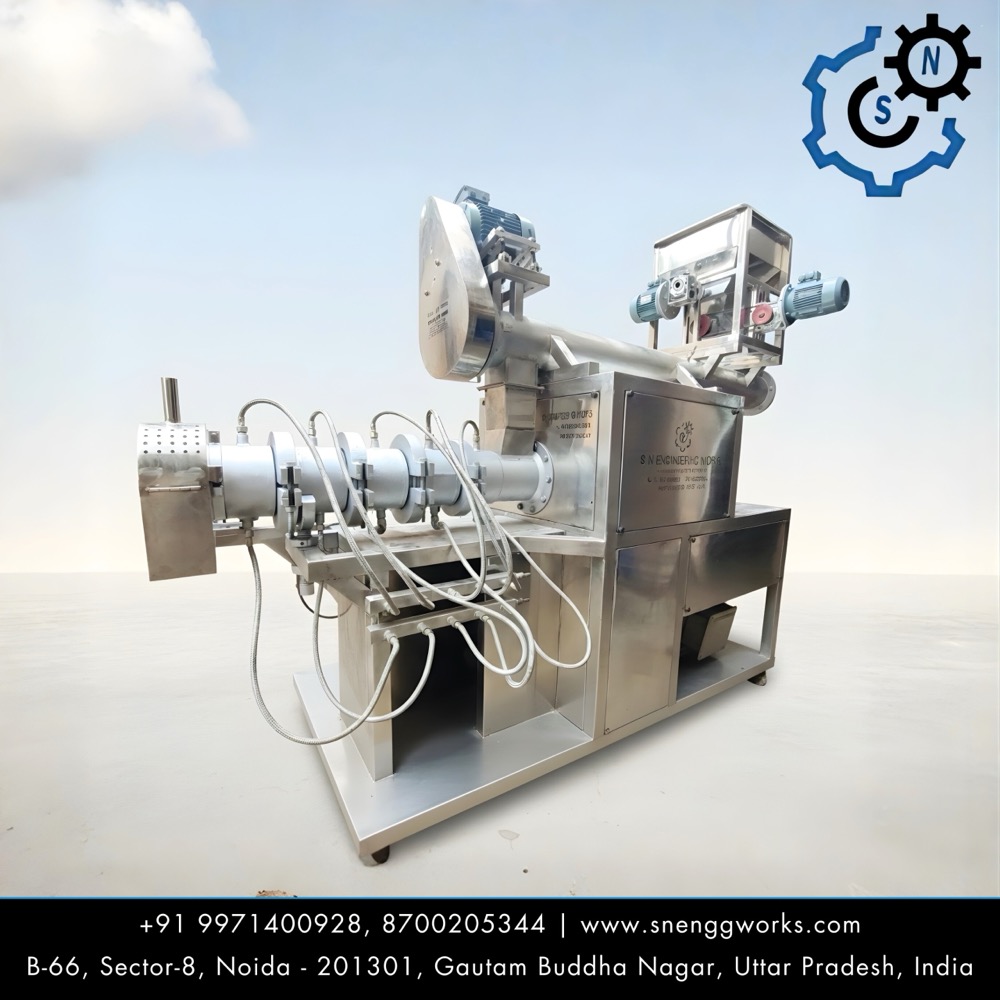
If the plant has a heart, it is the extruder. Inside the barrel, the feed mixture is cooked under heat and pressure, then pushed through a die that shapes it into pellets. Small changes in screw design, moisture and temperature can change how the final feed floats, sinks and holds together in water.
That is why a floating fish feed machine should be chosen carefully. Floating feed lets farmers see how much the fish are eating, which helps reduce waste. Sinking fish feed suits species that feed lower in the water. Ask the manufacturer which feed type the machine is designed for, and whether it can handle another type by changing settings or dies.
Also ask about the screw and barrel material, how easily wear parts can be replaced, and which die sizes are available.
Single Machine or Complete Plant?
Not every business needs a full plant on day one. Some start with a single fish feed making machine to test the market or to feed their own farm. Others go straight to a complete plant because they already have orders and want to scale.
Neither choice is wrong. What matters is working with a manufacturer who can support both paths. If you start small, you should be able to add a dryer, cooler or packing unit later without redoing everything.
What to Check Before Choosing a Fish Feed Plant Manufacturer
Every brochure looks good. These points tell you much more about the real quality of a manufacturer.
Build Quality and Materials
Parts that touch the feed should be made from food-grade material. Welding, finishing and motor fitting should look neat and solid, not rushed.
Honest Capacity Details
Ask which raw materials and formulation the stated capacity is based on. Output changes with ingredients, moisture and pellet size, so a clear explanation is a good sign.
Customisation
Your space, raw materials and market are unique. A good partner adjusts the plant layout and machine selection to your needs instead of offering one fixed design.
Spare Parts and After-Sales Support
Extruder parts wear out with regular use. Ask how quickly spare parts are available and who will help if the machine stops during a busy week.
Installation and Operator Training
Even the best machine gives poor results in untrained hands. Check whether installation guidance and basic operator training are part of the deal.
A Clear, Written Quotation
The quotation should state exactly what is included, such as machines, motors, control panels and installation support, so there are no surprises later.
Thinking About Fish Feed Plant Cost the Right Way
Fish feed plant cost depends on capacity, level of automation, the number of machines and the type of feed you want to make. The lowest quote is not always the best deal. A cheaper machine that breaks down often, uses more power or gives uneven pellets can cost far more over a year.
Look at the full picture: purchase price, electricity use, maintenance, spare parts and the time lost when the line stops. Ask each manufacturer for a written quote with the same scope, so you can compare like with like.
Common Mistakes Buyers Should Avoid
- Choosing only on price
- Buying more capacity than the market can absorb
- Forgetting space for raw material storage and finished stock
- Skipping questions about demos, videos or similar working plants
- Not planning for trained operators and regular maintenance
Quick Answers to Common Questions
How do I decide the right plant capacity?
Start with your daily feed requirement or sales target, then leave some room for growth. A slightly modest plant that can be expanded is usually safer than an oversized one running half empty.
Can one plant make both floating and sinking feed?
Often yes, depending on the extruder design and your formulation. Always confirm this with the manufacturer before you finalise the order.
Is a dryer necessary?
Extruded feed comes out warm and moist. Drying and cooling help the feed store well and reduce the risk of mould, so most plants include them.
Planning Your Project With SN Engineering Works
SN Engineering Works has been manufacturing food processing machinery since 2012 and offers fish feed machines and plant solutions for different production needs. If you are exploring a project, share your feed type, capacity and budget, and the team can suggest a suitable configuration. Visit SN Engineering Works to see the full machine range, or get in touch to discuss your plan.
Take your time, compare carefully and choose a partner who answers your questions clearly. A well-matched plant can serve your business for years.