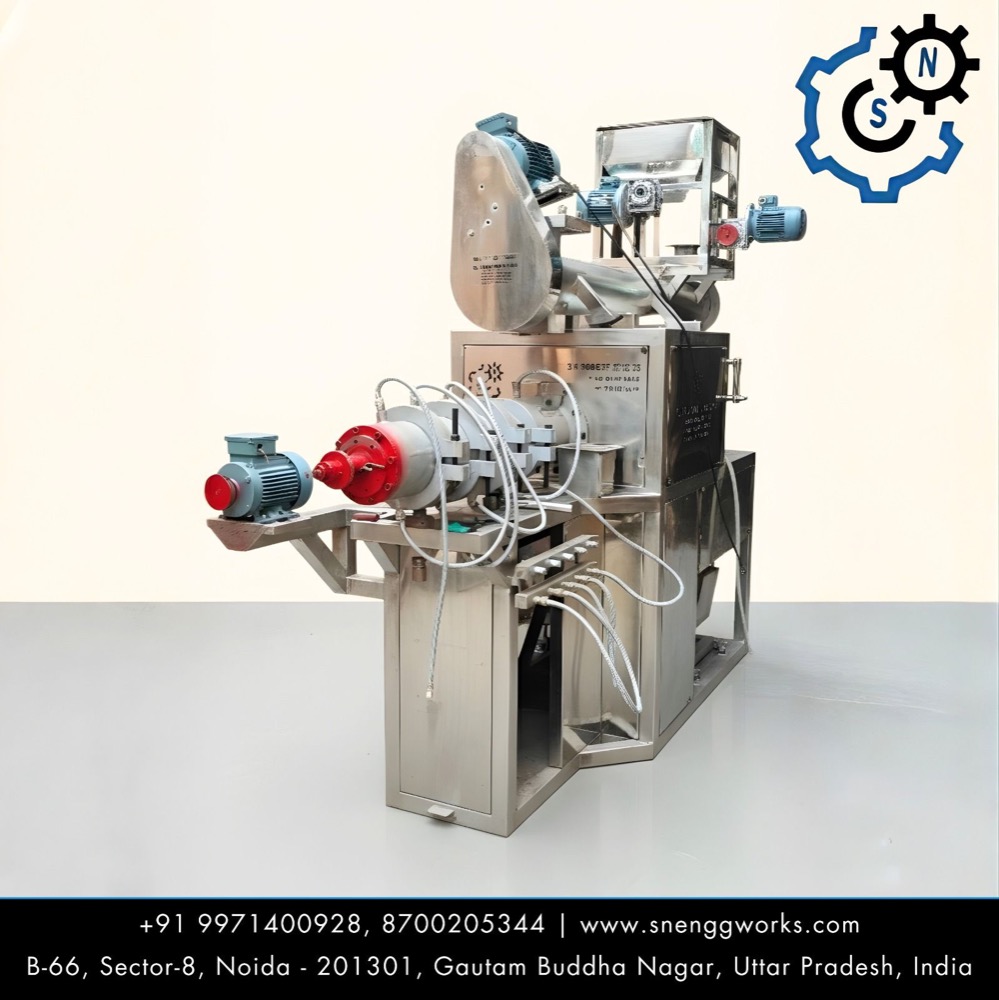
Soya nuggets, also called soya chunks, are a staple in Indian kitchens. They are cheap, rich in protein and easy to cook with, so demand stays steady through the year. That is why many first-time entrepreneurs and existing food manufacturers want to start or expand a unit. But before you think about packaging or sales, you need to settle one question: which Soya Nuggets Machine Manufacturer should you trust with your investment?
This guide walks through the points that really matter, in plain language, so you can ask better questions and avoid common buying mistakes.
Start With Your Production Goal, Not the Machine
A common mistake is to start by comparing prices. A better starting point is your own plan. Ask yourself how many kilograms of finished product you want to make per hour, how many shifts you will run, and whether you plan to grow in the next two or three years.
Picture two buyers. One wants to supply local grocery shops from a small shed. The other already runs a flour mill and wants to add a bigger line for wholesalers. Both need a soya nuggets making machine, but their ideal capacity, power load and floor space are very different. When you share these details openly, a good manufacturer can suggest a suitable setup instead of pushing one model for everyone.
Understand How Soya Nuggets Are Made
You do not need to be an engineer, but knowing the basic flow helps you judge what you are buying. In most plants, defatted soya flour or a soya mix is prepared and fed into an extruder. Inside the barrel, heat, pressure and moisture act on the material. As it leaves the die, it expands and is cut into chunks or nuggets. The product is then dried, cooled and packed.
Each stage affects the final texture, colour and shelf life. So when a supplier talks about a machine, ask which stage it handles and how it connects with the rest of the line.
The Heart of the Line: The Extruder
If there is one machine you should study closely, it is the soya nuggets extruder. It decides how evenly the product cooks, how well it expands and how consistent the size remains from batch to batch.
Here are a few practical questions worth asking:
- What output range can the extruder handle with the raw material I plan to use?
- Which parts touch the food, and what material are they made from?
- How easy is it to change dies if I want a different shape or size?
- How are wear parts such as screws and barrels replaced?
If you also want to produce soya granules or badi, check whether the same line can be adjusted for them. Some buyers later add a soya chunks making machine setup for a wider product range, so it helps to plan for this early.
Plant Setup and Supporting Equipment
The extruder is only one part of the picture. A complete soya nuggets plant usually also needs a mixing unit, a feeding system, a cutter, a dryer and a cooling and packing area. If these units are not matched properly, you may end up with bottlenecks, where one machine waits for another and output drops.
This is where good soya processing equipment planning pays off. Ask the manufacturer to explain the layout, the power requirement, the water or steam needs, and the space you will need around the machines for cleaning and movement. A clear layout discussion before purchase can save you from costly changes later.
Manual, Semi-Automatic or Automatic?
Automation brings steady output and reduces labour dependence, but it also costs more. A soya nuggets automatic machine line may suit you if you are aiming for large, continuous runs. A simpler setup can be a sensible starting point if you are testing the market with limited capital. There is no single right answer. The better choice is the one that matches your budget, your staff skills and your sales plan.
What to Look for in a Manufacturer
Once you know your needs, you can judge suppliers with more confidence. Look beyond the brochure and check the following:
- Build quality: Sturdy fabrication, neat welding and food-grade contact parts are signs of careful engineering.
- Hygiene-friendly design: Machines that are easy to open and clean make it easier to maintain food safety.
- Honest guidance: A reliable supplier explains limits and trade-offs, not only benefits.
- Installation and training: Your team should learn how to run, clean and adjust the line properly.
- Spare parts and service: Quick access to parts matters because downtime directly affects income.
- Track record: Ask how long the company has been building food machinery and whether you can see machines or documentation.
It also helps to visit a working unit when possible, or at least ask for a demonstration of the process. Seeing the machine run with real material tells you more than any specification sheet.
Think About Running Costs Too
The purchase price is only the start. Electricity, raw material, labour, spare parts and maintenance all add to your monthly cost. A machine that is slightly cheaper today but wastes material or breaks down often may cost you more in the long run. Ask for an estimate of power consumption and routine maintenance so you can plan your budget realistically.
Common Mistakes First-Time Buyers Make
Many new buyers choose a machine only on price, skip the layout discussion, or forget to plan for drying and packing. Others buy a very large line before they have a steady market. Starting with a realistic capacity, learning your product quality and then expanding is usually a safer path.
Another mistake is ignoring raw material quality. Even the best machine cannot give good results if the soya flour is inconsistent. Test your material, keep records of settings that work, and adjust step by step.
Choosing With Confidence
A good manufacturer acts like a long-term partner, not just a seller. SN Engineering Works builds food processing machinery from its base in Noida and works with businesses across India, helping them match equipment to their product, capacity and budget. You can explore the soya nuggets extruder and related plant options to understand what a typical setup looks like.
If you are still unsure where to begin, share your target output, raw material and budget with the team. A short conversation can clarify which configuration fits you best, and you can then get in touch to discuss the next steps for your soya nuggets unit.