Soya Badi Machine Manufacturers
Soya badi, also spelled soya bari, is a small dried soya piece that goes into curries and rice dishes. SN Engineering Works makes the machines that produce it. Our Soya Bari Making Machine is built in Noida, Uttar Pradesh, where we have manufactured food processing equipment since 2012.
If you want to start a badi unit or increase the output of an existing one, we can configure the machine for the piece size you sell.
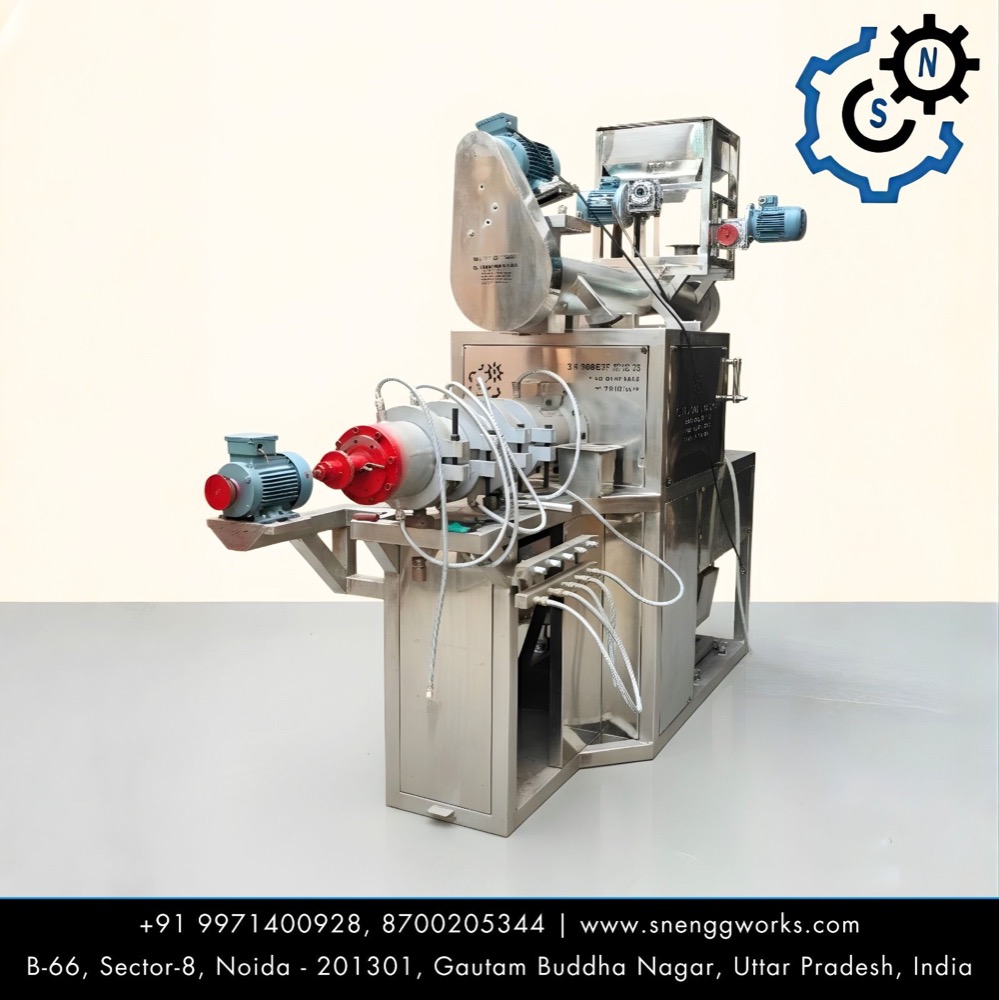
Soya Badi Machine
Approx. Price: Rs 5.5 Lakh / PieceProduct Details
| Parameter | Specification |
|---|---|
| Minimum Order Quantity | 1 Piece |
| Snacks Type | Soya Bari |
| Usage / Application | Industrial |
| Automation Grade | Automatic |
| Country of Origin | Made in India |
Soya Badi and Soya Chunks: What Is the Difference?
Both come from extruded soya, but badi is made in small pieces while chunks are larger. That size difference changes the die, the cutter and the way the product is handled afterwards.
| Point | Soya badi | Soya chunks |
|---|---|---|
| Piece size | Small, bite-sized | Larger, chewy pieces |
| Usual use | Curries and rice dishes | Curries, gravies and fry-ups |
| Machine focus | Fine cutting and gentle handling | Die size and cutting length |
What a Soya Badi Line Is Made Of
A badi line is built around four parts that must work at the same pace:
- Extruder: cooks the soya mix under heat and pressure and pushes it through a die.
- Cutter: trims the strand into small pieces. Its speed decides piece size.
- Conveyor: moves the cut pieces away without crushing them. See our soya badi conveyor belt page.
- Dryer: removes moisture so the pieces keep well after packing.
For a complete setup, our soya badi production unit page shows how these parts are combined.
Why Small Pieces Need Extra Care
Cutting
A dull or badly timed cutter gives ragged edges and mixed sizes. Ask how the cutter speed is set and how easily the blade can be changed.
Handling
Small pieces break easily. A short, gentle path from cutter to dryer produces less dust and fewer broken pieces.
Drying
Pieces that are dried unevenly stay soft in the middle or turn brittle outside. Even airflow across the tray or belt matters more here than raw drying speed.
Questions Worth Asking Before You Buy
- What piece size can the machine make, and can the die and cutter be changed?
- What hourly output should I expect with my own mix?
- Does the price include a conveyor and dryer, or only the extruder?
- What power connection does the machine need?
- Who installs it and trains the operators?
Who Our Soya Badi Machines Suit
New food entrepreneurs, small processors moving to machine-made badi, and established soya units that need more output will find a configuration here. We discuss your target first, then recommend only the parts you need.
Support After Delivery
Our team installs the machine at your site, runs trial batches with you and trains your operators. If you later need a different die or want to add a dryer, you can come back to the same manufacturer who built your line.
Frequently Asked Questions
Soya badi, also written as soya bari, is a small, dried, bite-sized piece made from soya. It is cooked in dishes such as curries and rice preparations and is made on an extruder fitted with a die and a cutter for small pieces.
Often a change of die and cutter is needed to move between small badi pieces and larger chunks. Whether one machine suits both depends on its design, so confirm this with the manufacturer before you order.
Our Soya Bari Making Machine is listed at an approximate price of Rs 5.5 Lakh per piece. The final price depends on the output you need and on any dryer or conveyor added to the line.
Small pieces are easy to damage. Rough handling after cutting, a dull cutter, uneven drying or a drop height that is too large can all produce dust and broken pieces. A technician can trace the cause on your line.