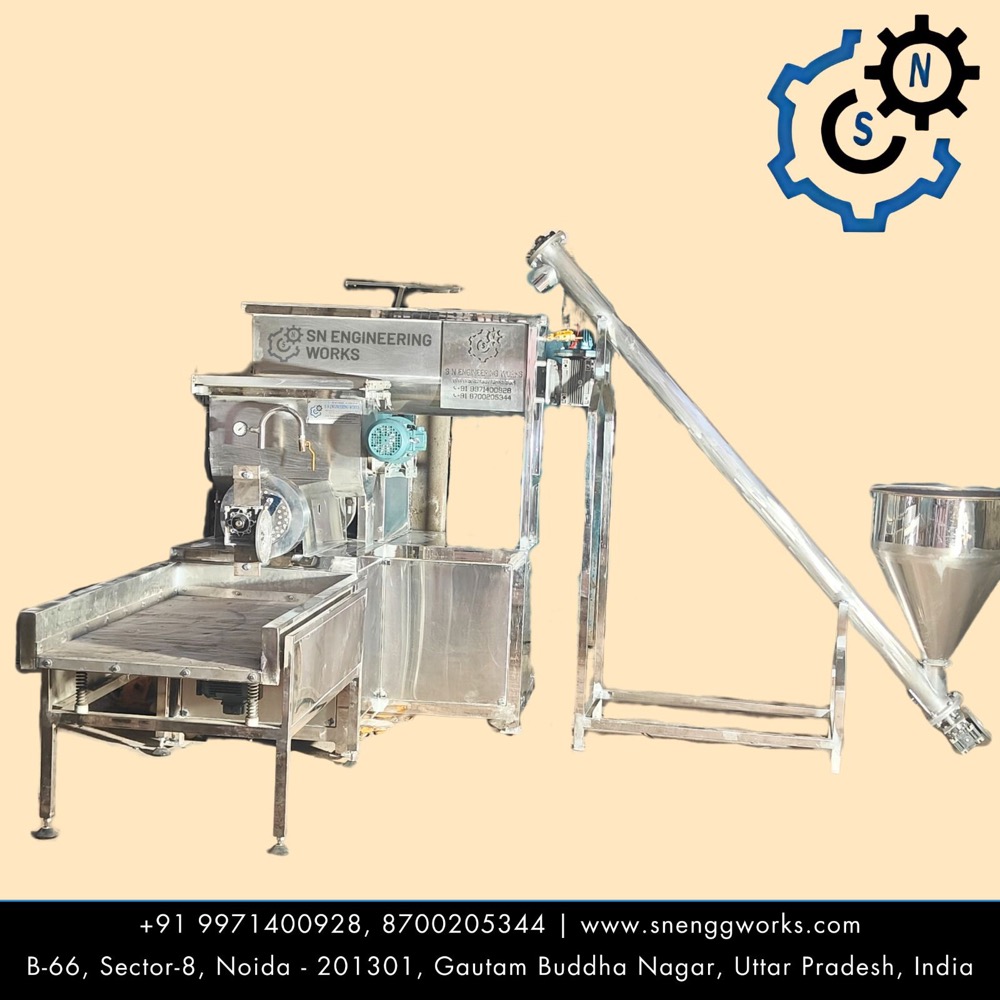
A buyer who searches for automatic pasta making machine manufacturers usually has a practical goal. They want steady output with fewer people handling the dough, and they want to avoid a machine that needs constant attention. The trouble is that two suppliers can both call a machine automatic while automating very different amounts of the work. Knowing what to ask removes most of that confusion.
What "Automatic" Should Mean in a Pasta Machine
An automatic pasta making machine carries out its main steps under set controls with little manual handling, so the operator supervises the process instead of performing each step by hand.
Some suppliers use the word for a machine where only the extrusion is automated. Others use it for a connected line. To compare fairly, ask which of these stages run without hand work:
- Feeding and dosing: flour and water measured and delivered to the mixer.
- Mixing and kneading: dough prepared to a set condition.
- Extrusion and cutting: pasta shaped through a die and cut to length.
- Transfer to the dryer: pasta moved without being carried by hand.
- Drying control: heat, airflow and time held at the settings you chose.
Automatic and Semi-Automatic Machines Compared
| Point | Semi-automatic | Automatic |
|---|---|---|
| Operator involvement | Operator performs several steps by hand | Operator supervises and handles raw material and cleaning |
| Consistency | Depends more on the operator | More repeatable from batch to batch |
| Starting cost | Usually lower | Usually higher |
| Suits | Small units testing a local market | Units supplying retailers or running full shifts |
Neither is right for everyone. If you plan one shift a day and a small local market, a semi-automatic machine can be a sensible start. If you expect orders from distributors who want identical packs every week, automation pays for itself in consistency.
Checking an Automatic Line Before You Buy
A brochure cannot show how a machine behaves on your floor, so check these points directly:
- Can the operator change settings from the control panel, and do the settings hold from one batch to the next?
- What happens when something goes wrong: does the machine stop safely and show a clear signal?
- How easily can dies be changed, and how long does a shape change take?
- Can you open and clean the parts that touch the dough, and are they stainless steel?
- What power connection does it need, and how quickly can you get spares?
If the manufacturer offers a demonstration or trial run, take it. Watching the machine run for an hour tells you more than any specification sheet. You can compare the machines we list on our industrial pasta making machine page, and our automatic macaroni machine page covers short-cut pasta.
Automation Stops at the Dryer If You Let It
A common and costly mistake is to buy an automatic extruder and then handle everything after it by hand. If pasta is carried to the dryer in trays and loaded by hand, the line slows to the speed of the people doing it, and handling can damage fresh pasta. Plan the path from cutter to dryer together with the extruder. Our pasta dryer machine page explains what to look for, and the pasta plant page shows how the stages connect into one line.
Match the Machine to Your Shapes and Your Buyers
Before you compare quotes, write down the shapes you plan to sell in the first year. Short cuts such as macaroni and penne, and long pasta, need different dies, cutters and drying, so a machine built for one may not suit the other. Fewer shapes at the start usually means a simpler and cheaper line.
Then think about who will buy. A supplier to local shops can start with small batches and change shapes often. A supplier to retailers or distributors needs the same size, colour and cooking time in every pack, and that is where automatic control helps most. A short buyer profile like this lets pasta making machine manufacturers recommend the right level of automation instead of the most expensive one.
Mistakes Buyers Often Make
- Judging by the word alone. Ask which steps are automatic, in writing.
- Buying far more capacity than demand. A machine that runs half empty wastes energy and money.
- Skipping operator training. Even an automatic machine needs people who understand it.
- Overlooking power supply. Check the phase and voltage before the machine arrives.
- Ignoring spares and service. Dies, cutters and wear parts should be easy to get.
Frequently Asked Questions
What is an automatic pasta making machine?
It is a machine, or a connected set of machines, that mixes, extrudes and cuts pasta under set controls with little manual handling. The operator supervises the process.
Does automatic mean no operator is needed?
No. Someone still loads raw material, watches the machine, cleans it and changes dies. Automation reduces hand work and variation, but it does not remove the operator.
How do pasta making machine manufacturers decide capacity?
They size it from your target hourly output, the pasta shapes you plan to make and your working hours. Share these first, and ask for the output of the whole line, including the dryer.
What does an automatic pasta machine cost?
It depends on capacity and the stages included. The Macaroni Making Machine on our website is listed as automatic grade, with an approximate price of Rs 8 Lakh per unit and an output of 100 to 150 kg per hour.
Final Thoughts
Pick a machine by what it automates, how it behaves in a trial and what support comes with it, not by the label on the listing. SN Engineering Works builds food processing machines in Noida, Uttar Pradesh, and our team has done so since 2012 under the guidance of Mr. Mohd Naeem. If you would like to talk through your shapes, output and space, get in touch with our team.
Written by: SN Engineering Works Editorial Team, a Noida-based food processing machinery manufacturer (est. 2012). Published: 25 November 2026.