Macaroni Plant Manufacturers
SN Engineering Works builds macaroni plants in Noida, Uttar Pradesh, and has manufactured food processing machinery since 2012. Our plants take semolina or flour and water through mixing, extrusion, cutting and drying, so a small or growing food business can run macaroni production on one matched line.
Every plant is planned around your shapes, hourly output and factory space, with technical guidance, installation and operator training from our team.
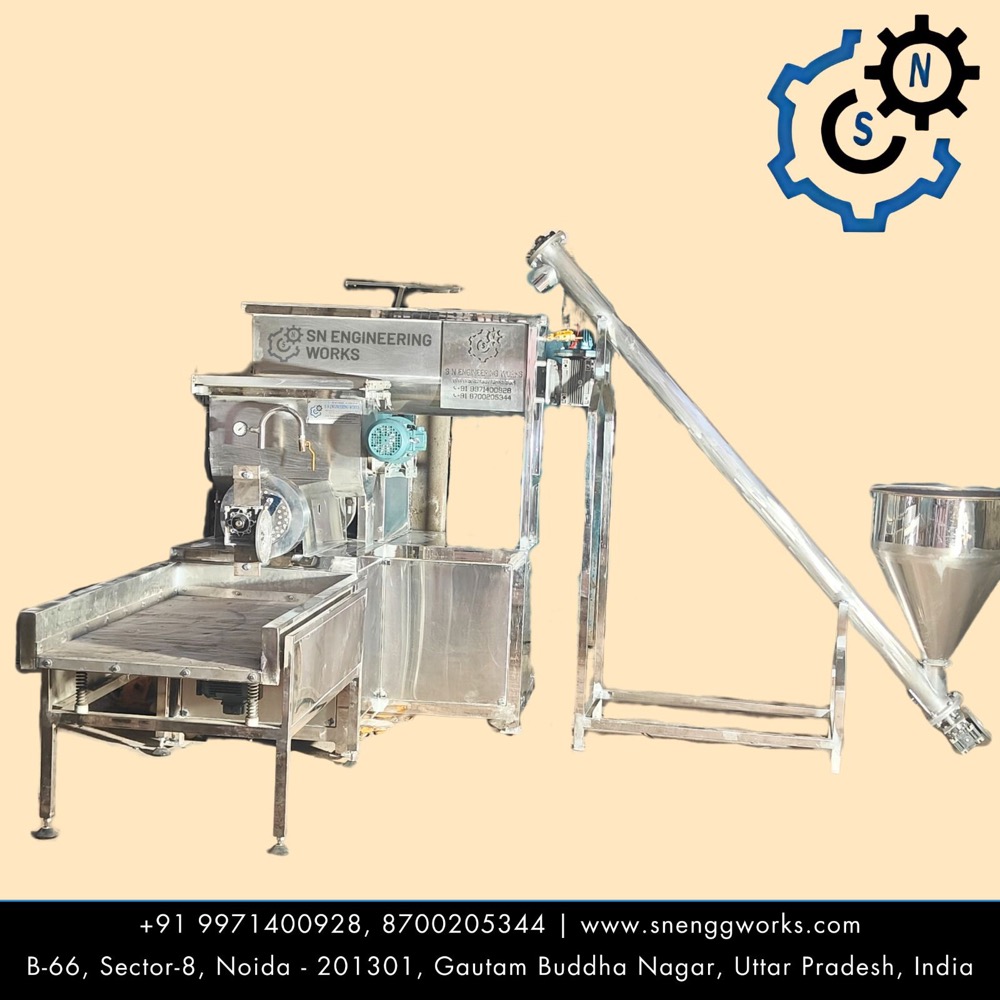
Macaroni Making Machine
Approx. Price: Rs 8 Lakh / UnitProduct Details
| Parameter | Specification |
|---|---|
| Minimum Order Quantity | 01 Unit |
| Capacity | 100 - 150 kg/hr |
| Material | SS (Stainless Steel) |
| Phase | 3 Phase |
| Voltage | 380V to 480V |
| Usage | Industrial |
What a Macaroni Plant Includes
A macaroni plant is a connected line, not a single machine. Each stage hands the product to the next, and the line is only as steady as its weakest stage. A typical plant has:
- Mixing: semolina or flour is blended with water into an even dough.
- Extrusion: the dough is pressed through a die that sets the macaroni shape.
- Cutting: the extruded pasta is trimmed to the length you want.
- Drying: moisture is removed gradually so the pasta stays strong and stores well.
- Cooling and packing: dried pasta is cooled and packed for dispatch.
How to Choose a Macaroni Plant Manufacturer
Choose a manufacturer who plans the whole line around your product and factory, rather than quoting machines one by one. The table below shows what to compare.
| What to check | Why it matters |
|---|---|
| Capacity of every stage | The mixer, extruder and dryer should be sized to work together at your hourly target. |
| Drying section | Drying often decides finished quality. Uneven drying leaves cracked or fragile pasta. |
| Shape range and dies | Confirm which shapes the line makes and whether extra dies can be added later. |
| Floor space and layout | A clear flow from raw material to finished pasta keeps cleaning and handling simple. |
| Power and utilities | Check electricity and water needs before the plant arrives. |
| Installation and after-sales help | Trial runs, operator training and spare parts keep production on schedule. |
Plan Capacity from Your Working Day
Start with how much finished pasta you want to sell, then work backwards. For example, a line running at 100 kg per hour for an eight-hour shift gives about 800 kg a day, before stoppages and cleaning. Our Macaroni Making Machine is listed at 100 to 150 kg per hour.
The dryer usually sets the real limit of the plant, because pasta must dry fully before packing. When you speak to any manufacturer, ask for the output of the whole line, not only the extruder. If you are comparing extruders separately, see our page on pasta extruder manufacturers.
Who Our Macaroni Plants Suit
- New entrepreneurs starting a macaroni or pasta unit
- Food manufacturers adding pasta to an existing product range
- Existing pasta makers who want a second line or more capacity
Why Buyers Talk to SN Engineering Works
Our factory is in Sector 8, Noida, and we have been building food processing machines since 2012 under the guidance of Mr. Mohd Naeem. We start with your product, output target and space, then customize the plant to match. A matching pasta dryer machine can be supplied with the line, so the stages are sized together. Installation at your site and operator training are part of the process.
Frequently Asked Questions
A macaroni plant is a connected production line that turns semolina or flour and water into dried macaroni. It typically includes mixing, extrusion through a die, cutting and drying, with cooling and packing after that.
The cost depends on the capacity you need and which stages the line includes. Our Macaroni Making Machine is listed at an approximate price of Rs 8 Lakh per unit. Share your requirements for a quote that matches your exact setup.
Yes, within limits. The die sets the shape, so the same plant can make macaroni and other short-cut shapes such as penne. Cutting and drying settings may need small adjustments for each shape.
Share the shapes you want to make, your target output per hour, daily working hours, available floor space and power supply, so the plant can be matched to your factory.