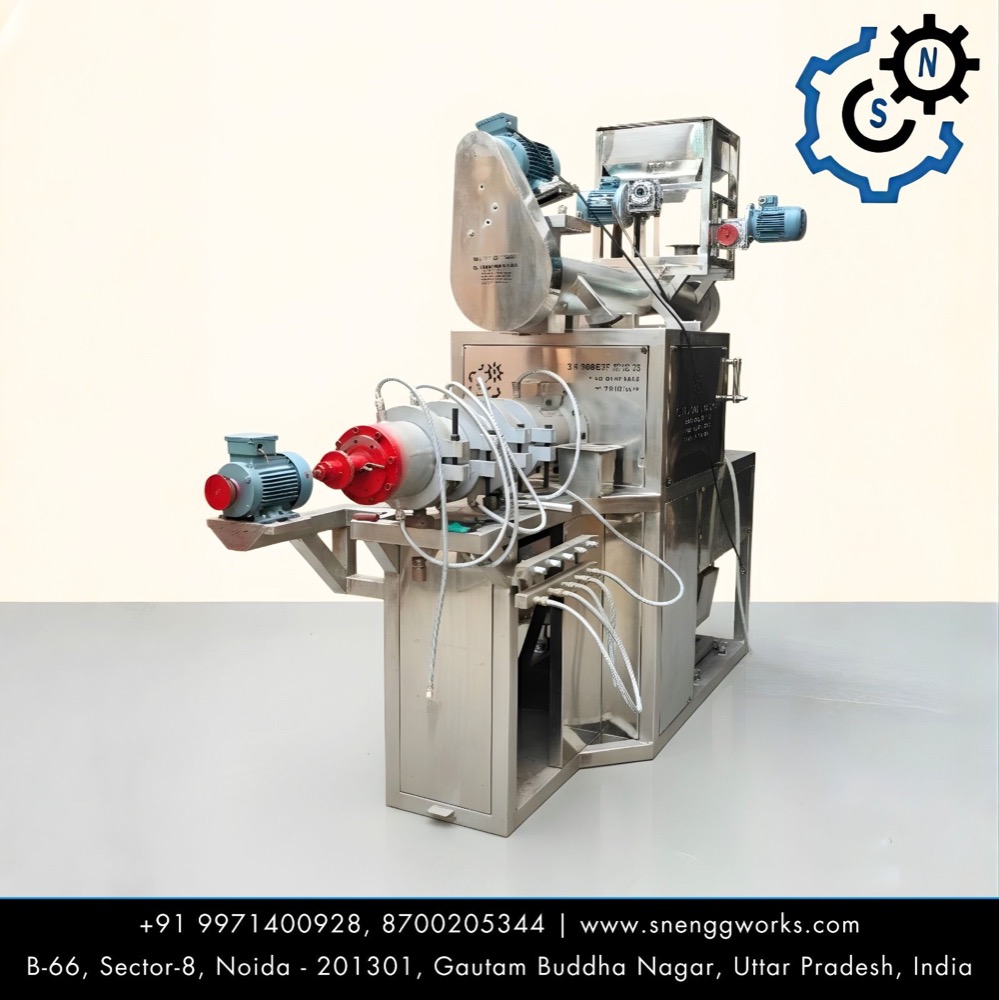
People usually start looking at soya badi machine manufacturers for one of two reasons. They want to begin making badi as a new business, or they already sell it and need a machine that gives the same size and texture every day. Both buyers face the same problem: many machines look alike in a brochure, and the differences only show up once production starts.
What Soya Badi Is and How a Machine Makes It
Soya badi, also written as soya bari, is a small, dried, bite-sized piece of soya used in curries and rice dishes. Machine-made badi is produced on an extruder. The soya mix is cooked under heat and pressure, pushed through a die, and a cutter trims the strand into small pieces, which are then dried.
Two parts of that process decide the product more than any others. The cutter sets the piece size, and the drying sets how firm and how long-lasting the piece is. Keep both in mind when you compare machines.
Start With Your Daily Sales, Not the Machine
A simple way to avoid buying the wrong size is to work backwards from what you can sell. For example, if you plan to sell 400 kg of badi a day and the dried weight is lower than the weight that leaves the extruder, you need an extruder and a dryer that can deliver that amount of finished product in your working hours, with time left for cleaning and stoppages.
Ask every manufacturer for the output of the finished, dried product on your own soya mix. A rated figure printed on a machine often describes the extruder alone, and the dryer may set the real limit. If you also plan to make larger pieces later, read our page on soya chunks machine manufacturers to see how that product differs.
What Else You Need Beyond the Extruder
The extruder is only the first stage. A working badi unit needs a few supporting machines, and each one adds to the budget and the floor space:
- Conveyor: moves cut pieces away gently. Small pieces break easily, so a rough drop creates dust. See our soya badi conveyor belt page.
- Dryer: removes moisture so the badi stays firm in the pack. Our notes on soya drying explain the stage in more detail.
- Cooling and packing area: dry, clean and separate from raw material storage.
If you want to see how these parts fit together as one line, our soya badi production unit page shows a complete setup.
Questions to Ask Soya Badi Machine Manufacturers
- What piece sizes can the machine make, and can the die and cutter be changed later?
- What output do I get with my own soya mix once the badi is dried?
- Does the quoted price include a conveyor and dryer, or only the extruder?
- Are the parts that touch the product stainless steel, and how easily can I clean them?
- Which electrical connection should I arrange before it arrives?
- Who installs it, runs trial batches and trains my operators, and how fast can I get spares?
Pay attention to how a manufacturer answers. One who asks about your product, your daily sales and your space is thinking about your results. One who only talks about price is not.
Common Problems in Soya Badi Production
| What you see | What it often points to |
|---|---|
| Dust and broken pieces | Dull cutter, rough handling after cutting, or a high drop onto the conveyor |
| Pieces of different sizes | Uneven feed, or cutter speed that does not match the extruder output |
| Soft or sticky badi after packing | Not enough drying, or packing while the pieces are still warm |
| Hard, brittle pieces | Over-drying, or too much heat during cooking |
Before you order, ask the manufacturer how they help when a problem like these appears on your line.
A Practical Way to Start Small
A new unit does not have to buy everything at once. Many people begin with the extruder and a simple drying and packing setup, learn the product, and add a conveyor and a larger dryer as sales grow. This only works if the extruder you choose can support your target output later, so say so at the start.
Frequently Asked Questions
What is a soya badi machine?
It is an extruder that cooks a soya mix under heat and pressure, pushes it through a die and cuts it into small pieces. The pieces are then dried to make soya badi.
How much does a soya badi machine cost?
The Soya Bari Making Machine on our website carries an approximate price of Rs 5.5 Lakh per piece. The total depends on the output you need and on any conveyor or dryer added to the line.
Can the same machine make soya badi and soya chunks?
Often a change of die and cutter is needed to move between small badi and larger chunks. Whether one machine suits both depends on its design, so confirm this before you order.
What details do manufacturers need for a soya badi quote?
Share the piece size you want, your daily sales target, the soya mix you use, your floor space and power supply, and whether you need only the extruder or a full line.
Final Thoughts
Choose a machine by the finished product it delivers on your mix and the support that comes with it, not by the rating on its plate. Our workshop is in Sector 8, Noida, and our team has made food processing machines since 2012 under the guidance of Mr. Mohd Naeem. If you want to discuss a badi machine or a complete unit, get in touch with our team.
Written by: SN Engineering Works Editorial Team, a Noida-based food processing machinery manufacturer (est. 2012). Published: 13 November 2026.